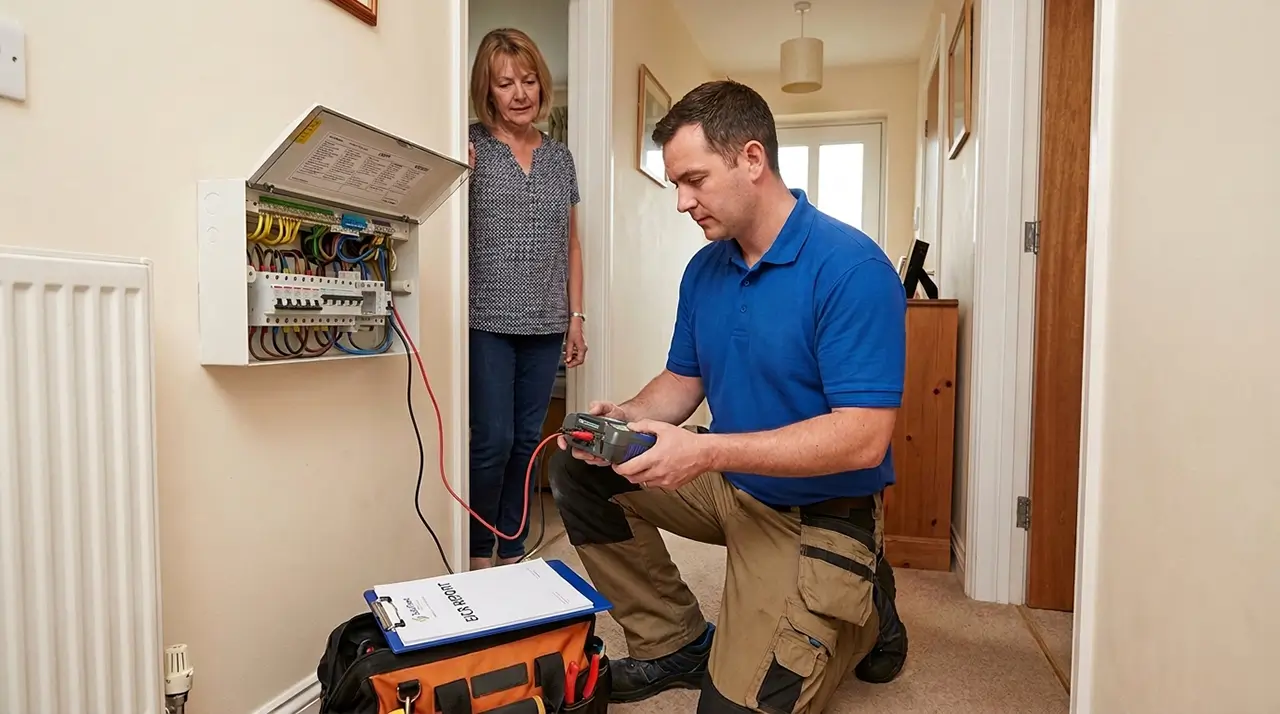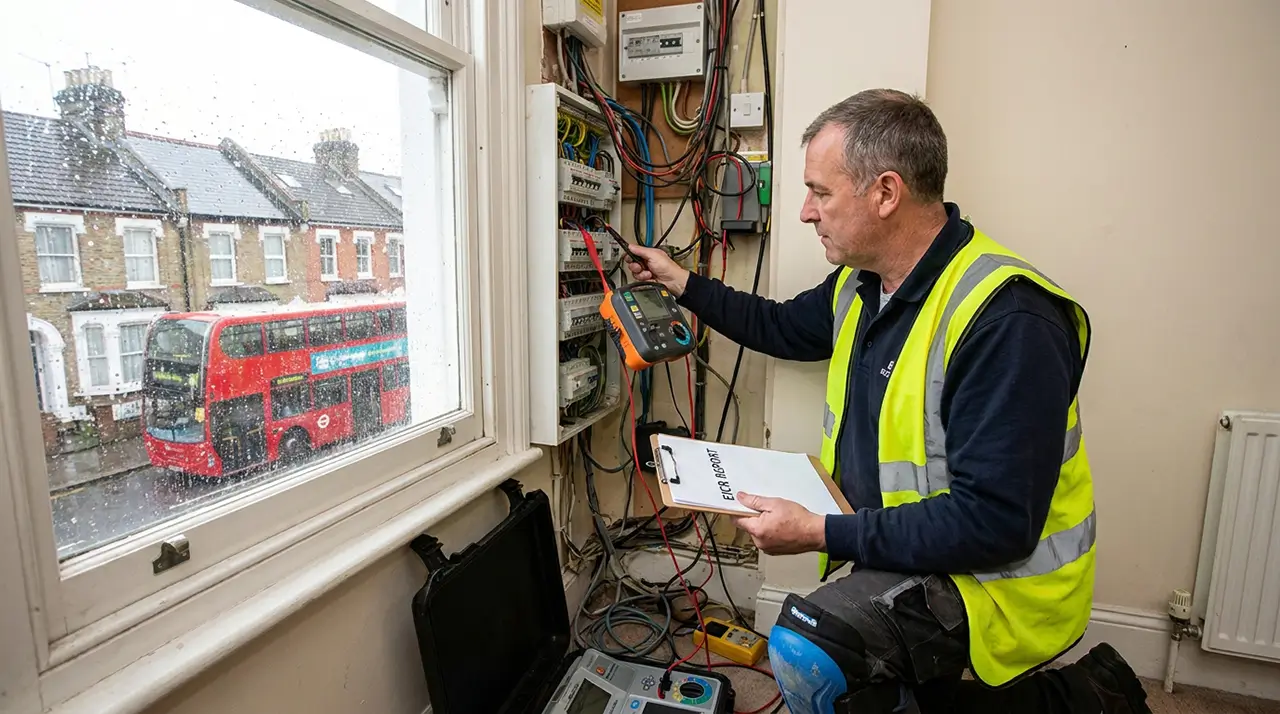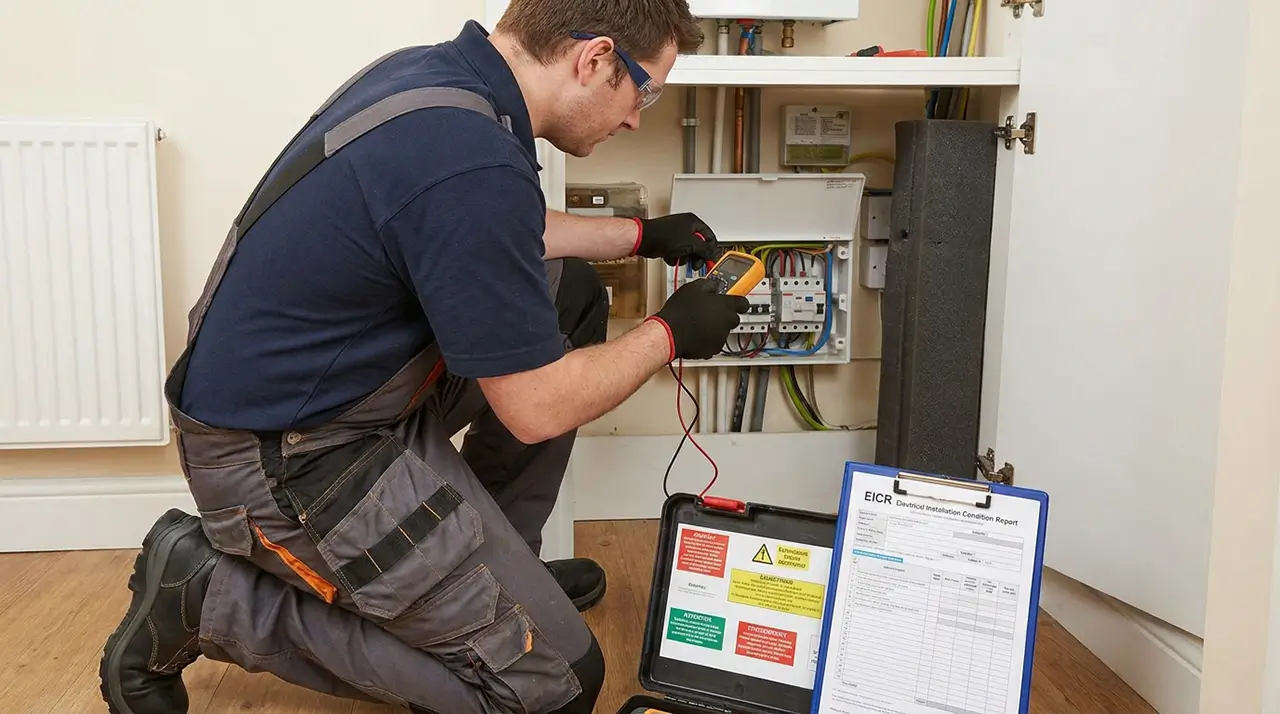
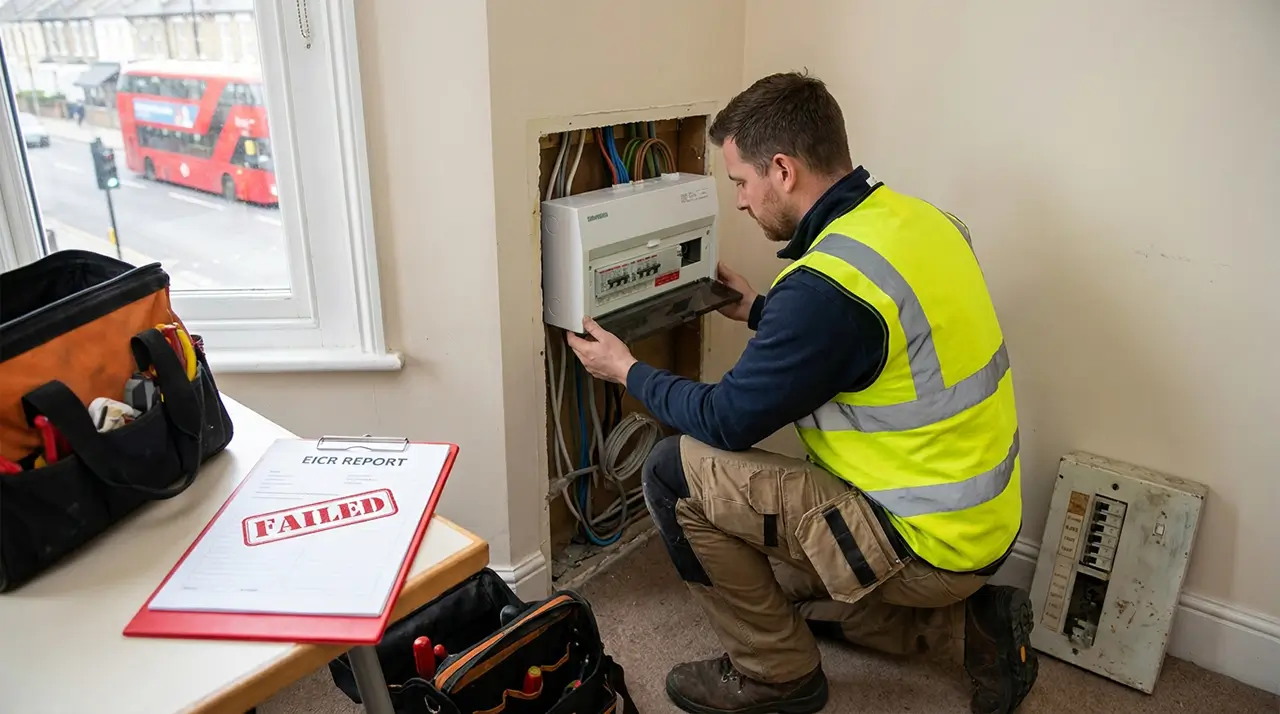
A consumer unit issue is one of the more common findings behind an unsatisfactory EICR. If your report has flagged something related to your consumer unit (fuse box), here’s how to understand what’s actually been found, work out the appropriate remedial action, and know when replacement is genuinely the right solution rather than an unnecessary upsell.
Why Consumer Units Are Flagged During EICRs
Consumer unit standards have evolved significantly over the past couple of decades. An older consumer unit may still be satisfactory if it remains safe and meets the requirements applicable to the installation, but older designs can lack features expected in modern installations and may be more likely to have defects identified during an EICR.
Common reasons a consumer unit gets flagged include:
- Missing or inadequate RCD protection, particularly on socket circuits or outdoor circuits
- A combustible (wooden or plastic) consumer unit enclosure, which may not provide the level of fire protection expected in current installations
- Signs of overheating, scorch marks, discolouration, or a warm-to-touch unit, which can indicate loose connections or overloaded circuits
- Outdated fuse wire circuits rather than modern circuit breakers or RCBOs
- General age, wear, or poor previous workmanship
None of these findings automatically mean the same thing for every property. The specific observation, and the condition of the rest of the installation, determines what action is actually needed.
Is It a C1 or a C2?
C1 means a danger is present. C2 means the installation is potentially dangerous. C3 means an improvement is recommended but isn’t an immediate concern, and FI means further investigation is required.
A combustible consumer unit enclosure may be flagged where it doesn’t provide the level of fire protection required for the installation, particularly where there are additional risk factors such as poor workmanship, overheating, or inadequate separation between circuits. Missing or inadequate RCD protection can similarly result in an adverse observation where the installation doesn’t provide the protection required for the circumstances. In both cases, the inspector determines the actual classification, C1, C2, C3, or FI, based on the specific risk found, not on the material or the missing feature alone.
This is worth understanding because it means two properties with a similar-looking issue can receive different classifications depending on the wider context the electrician observes on-site.
Does a Failed EICR Always Mean You Need a New Consumer Unit?
No. A failed EICR doesn’t automatically mean the consumer unit needs replacing. The correct remedial work depends on the specific observation recorded and the condition of the installation as a whole.
Some issues can be resolved by repairing a specific defect, improving protection on an individual circuit, replacing a damaged component, or carrying out further investigation as recommended in the report. A complete consumer unit replacement may be the appropriate recommendation where the existing unit is unsuitable, damaged, poorly configured, lacks appropriate protection across multiple circuits, or has several issues that together make replacement the more practical and cost-effective solution rather than a series of partial repairs.
Your electrician should assess the report and the installation itself before recommending which route makes sense for your specific property.
What Does Consumer Unit Replacement Involve?
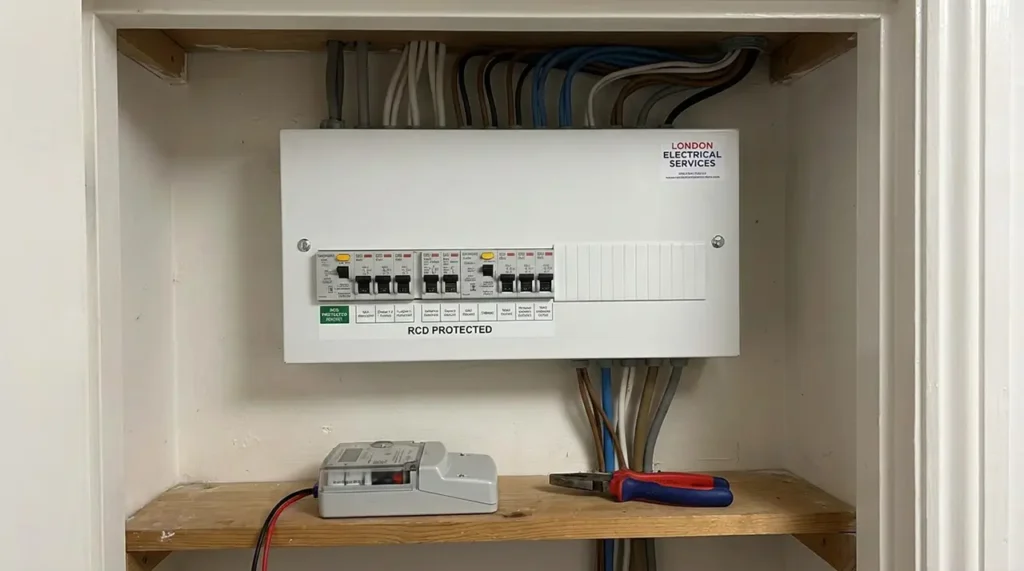
Where replacement is the appropriate solution, a typical job includes:
- Removing the old consumer unit and safely disconnecting existing circuits
- Installing a new consumer unit compliant with current regulations
- Installing appropriate RCD or RCBO protection where required by the design and current standards applicable to the new work
- Reconnecting and testing every circuit individually
- Labelling the new unit clearly, showing which breaker controls which part of the property
- Issuing an Electrical Installation Certificate (EIC) for the completed work
Most straightforward domestic replacements are completed in a single day, though this depends on the number of circuits and whether any additional issues are found once the old unit is opened up. A consumer unit is sometimes still referred to as a fuse box, and if you’re searching for fuse box replacement in London, this is generally the same work electricians refer to as consumer unit replacement.
Do I Need Building Control Notification?
Yes, generally. A consumer unit replacement is typically notifiable electrical work under Part P of the Building Regulations. If you use an electrician registered with a relevant competent person scheme, they can normally certify the work and notify Building Control on your behalf, so you don’t need to arrange this separately.
Can the Specific Issue Be Fixed Instead of Full Replacement?
Sometimes, depending on what’s actually been flagged. If the only issue is a single missing RCD on one circuit, it may be possible to add protection without a full unit replacement. If the unit itself is combustible, outdated, or shows multiple issues across several circuits, replacement is often the more practical long-term solution rather than a series of partial repairs that may still leave other problems unresolved. Your electrician can advise which applies once they’ve reviewed the report and inspected the unit.
How Much Does Consumer Unit Replacement Cost in London?
Cost varies depending on the number of circuits, the type of consumer unit being installed, the condition of the existing wiring, and any additional remedial work required. A straightforward domestic replacement can often be quoted as a fixed-price job once the electrician has confirmed the installation details on-site. If you’re already booking an EICR and want a rough idea of combined cost, it’s worth asking for a provisional consumer unit quote alongside your inspection, so you’re not facing two separate unexpected costs if the report does come back unsatisfactory.
What Documents Should I Receive?
After a consumer unit replacement, you should normally receive appropriate electrical certification for the work, along with confirmation of Building Regulations notification where applicable. Depending on the work carried out, this may include:
- An Electrical Installation Certificate (EIC)
- Building Regulations compliance notification or certificate
- Updated circuit identification and labelling
- Test results associated with the installation work
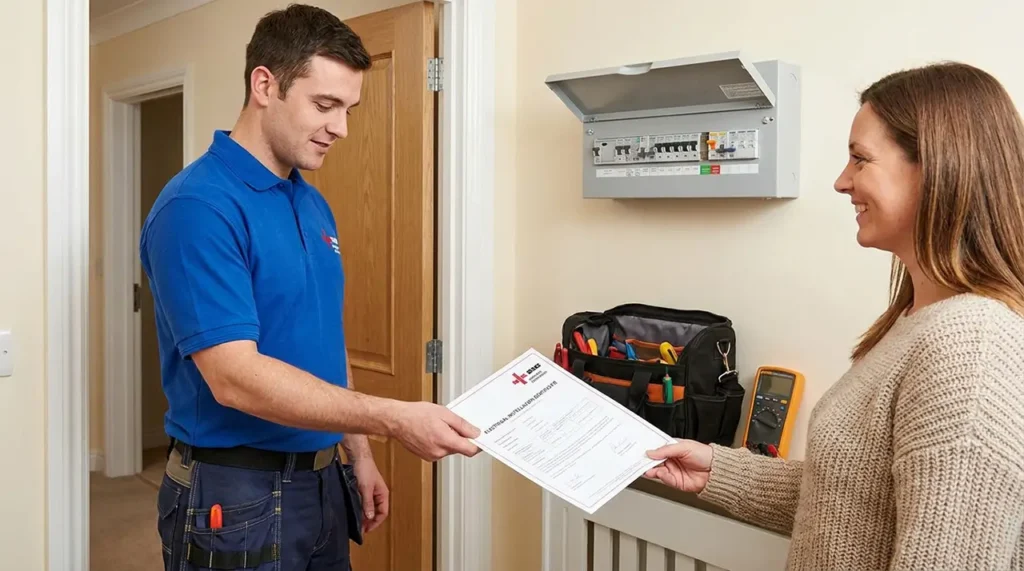
The Electrical Installation Certificate provides evidence that the new work has been completed and tested. For a rental property, you should also retain the original EICR and the written confirmation showing that the remedial work identified in the report has been completed, since you’re required to provide this documentation to your tenant and, when requested, your local council.
What Happens After Replacement?
Once the new consumer unit is installed and tested, the Electrical Installation Certificate confirms the work meets BS 7671. If the EICR identified remedial or further investigative work, it must generally be completed within 28 days, or any shorter period specified in the report. C1 findings indicate immediate danger and should be made safe without delay, while C2 findings indicate potential danger requiring urgent remedial action, generally within that 28-day window.
Frequently Asked Questions
Yes, briefly. The electrician will need to isolate the supply while disconnecting and reconnecting circuits, typically for a limited period during the appointment rather than an extended outage.
Generally yes, though certain rooms or circuits may be without power for periods during the day, so it’s worth planning around anything that needs continuous power.
Bringing your installation up to current standards is generally viewed positively for insurance purposes, but it’s worth checking with your specific insurer if you’re unsure how they handle electrical upgrades.
If the EICR identifies remedial or further investigative work, it must generally be completed within 28 days, or sooner if the report specifies. C1 findings should be addressed without delay given they indicate immediate danger.
Not necessarily. A consumer unit replacement normally results in an Electrical Installation Certificate for the new work rather than automatically triggering a completely new five-year EICR cycle. The next full EICR should still be carried out by the date specified on your existing report, unless your electrician recommends an earlier inspection based on the condition of the wider installation.
Repair or Replace? Getting the Right Advice
A consumer unit finding on a failed EICR is common, but it doesn’t automatically mean the whole unit needs replacing. The right next step depends on the specific observation and the condition of your installation as a whole, which is why it’s worth getting a proper assessment rather than assuming replacement is the only option. Where replacement genuinely is the right call, it’s usually a straightforward, single-visit job that brings the installation up to current standards and resolves the finding.
Had a consumer unit issue flagged on your EICR? Our NICEIC-registered electricians can assess the report and the installation, and advise honestly on whether a repair or a full replacement is the right fit for your property, with Building Control notification handled as part of the process. Get an assessment and quote today, or read our guide on what to expect from your EICR if you haven’t booked your inspection yet.