If you’re a landlord in London, understanding the difference between an EICR, a Gas Safety Certificate (CP12), and PAT Testing is essential. Each certificate covers a different part of your property, follows a different renewal period, and may or may not be a legal requirement depending on what’s in your property and how it’s let.
Confusing these three is one of the most common ways landlords end up non-compliant without realising it. Here’s what each one actually covers, and how to work out which ones your property needs.
EICR: Your Fixed Wiring and Electrical Installation
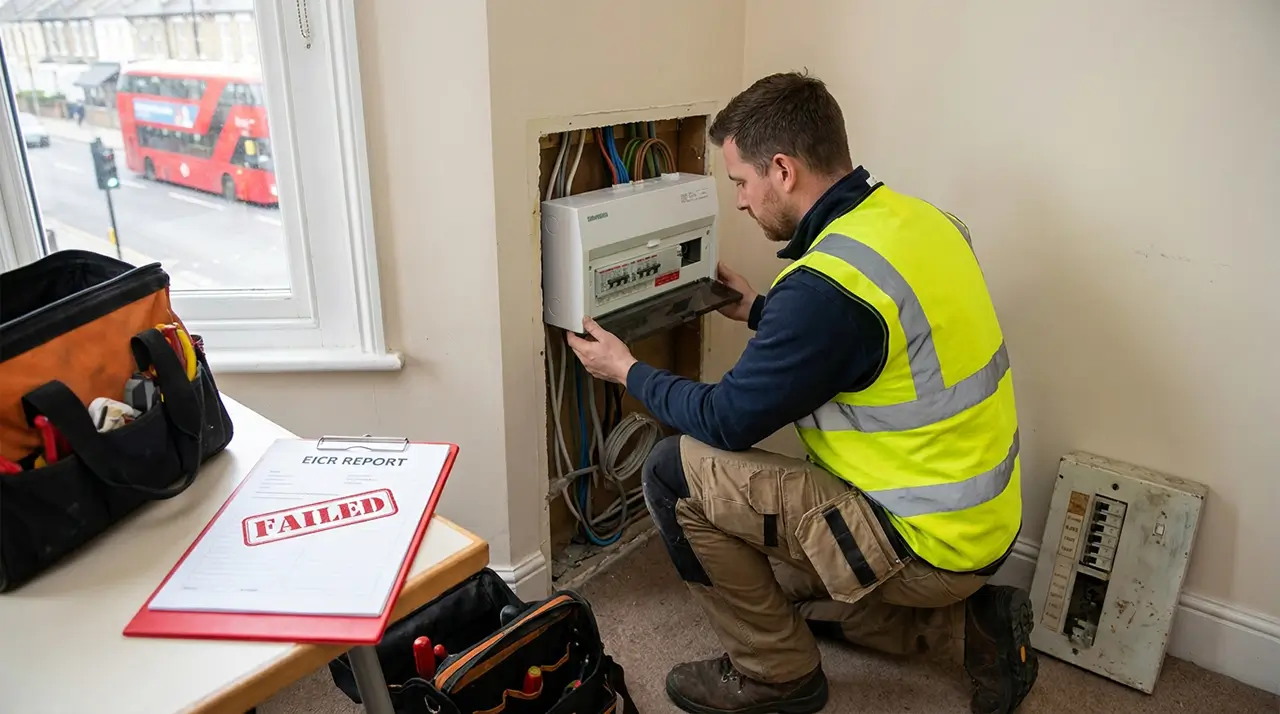
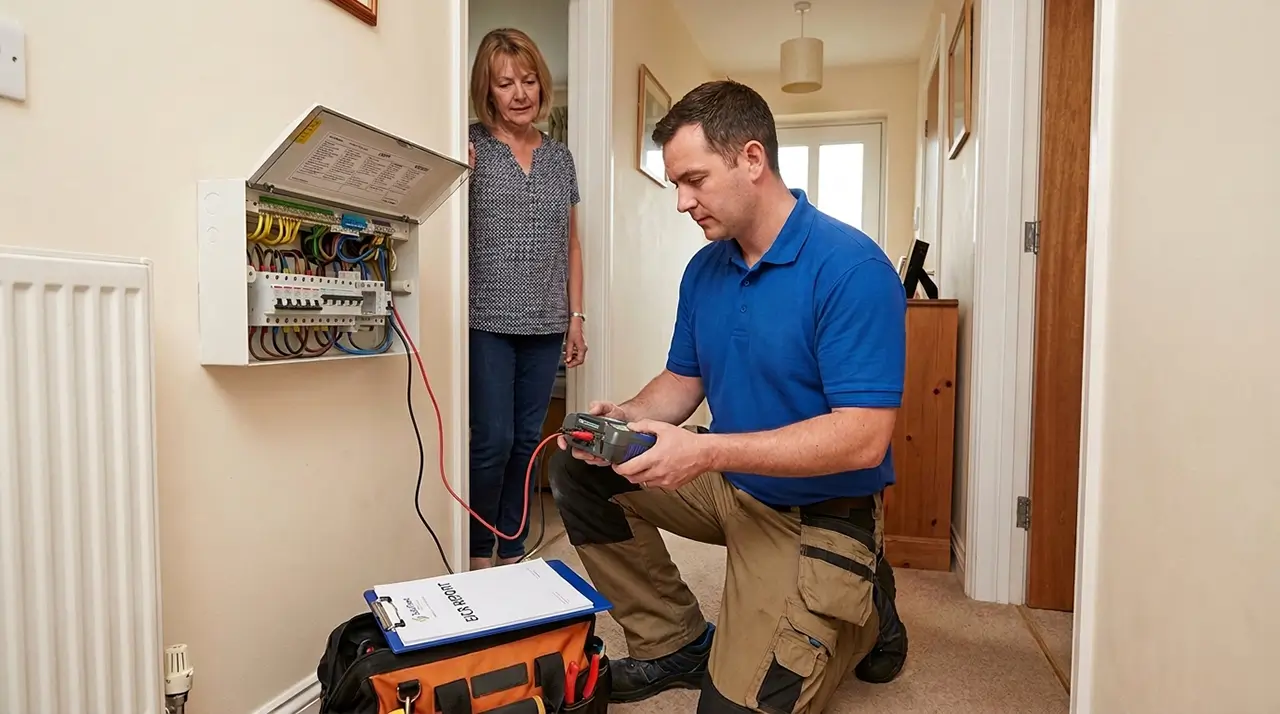
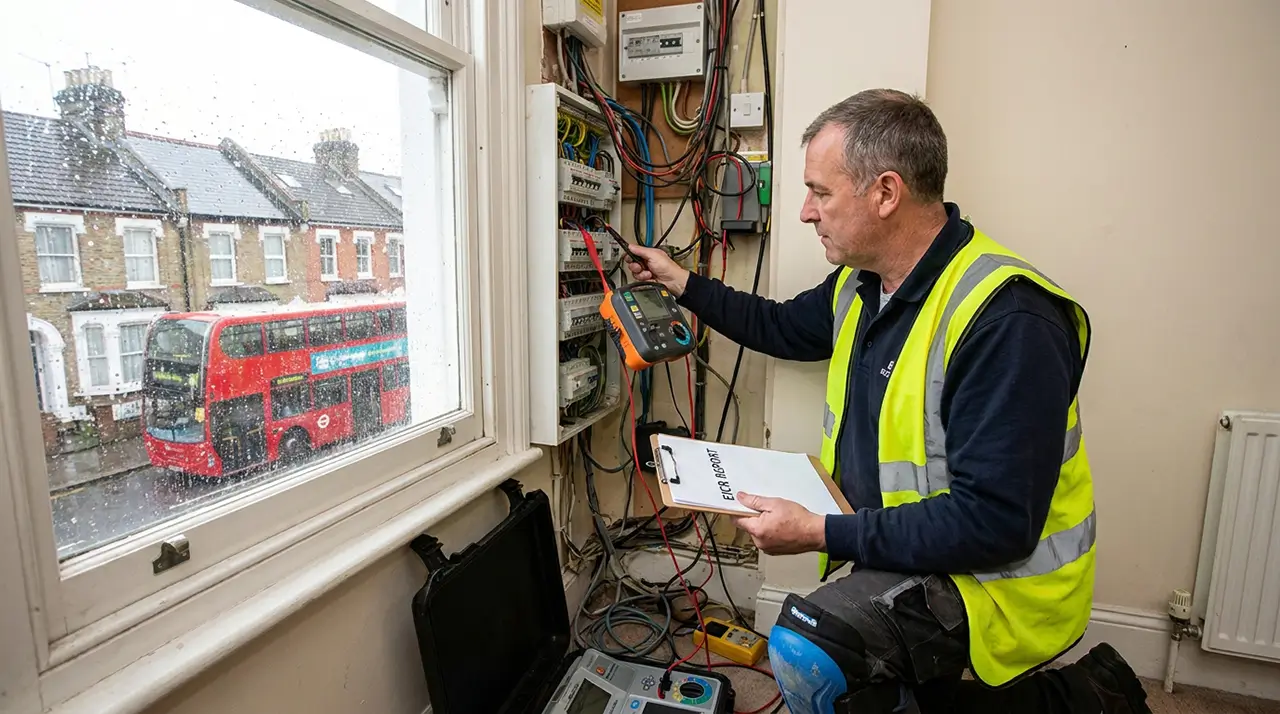
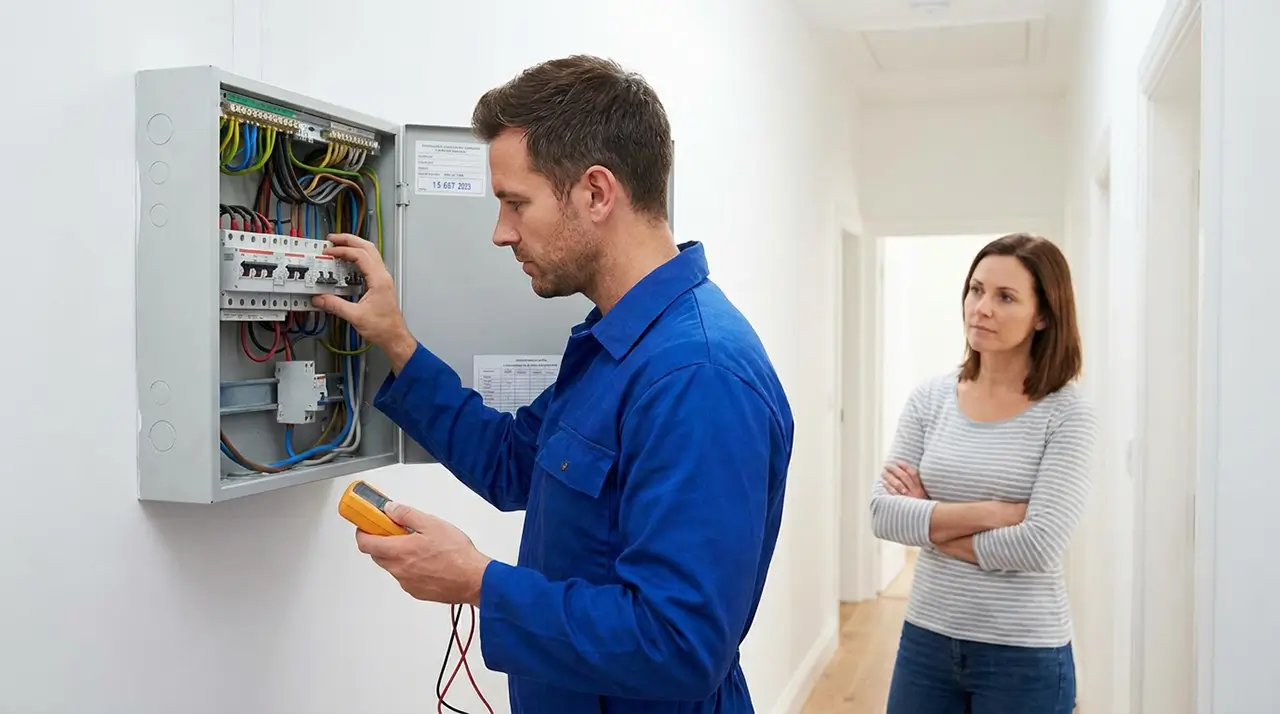
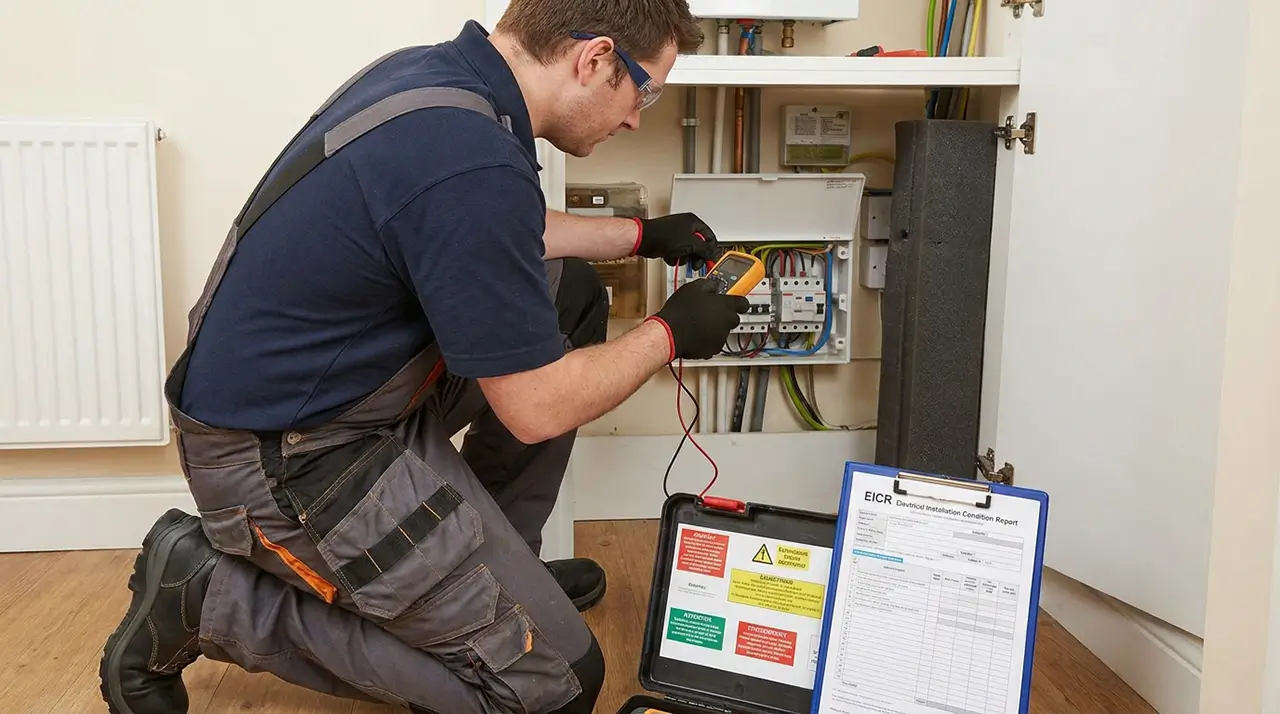
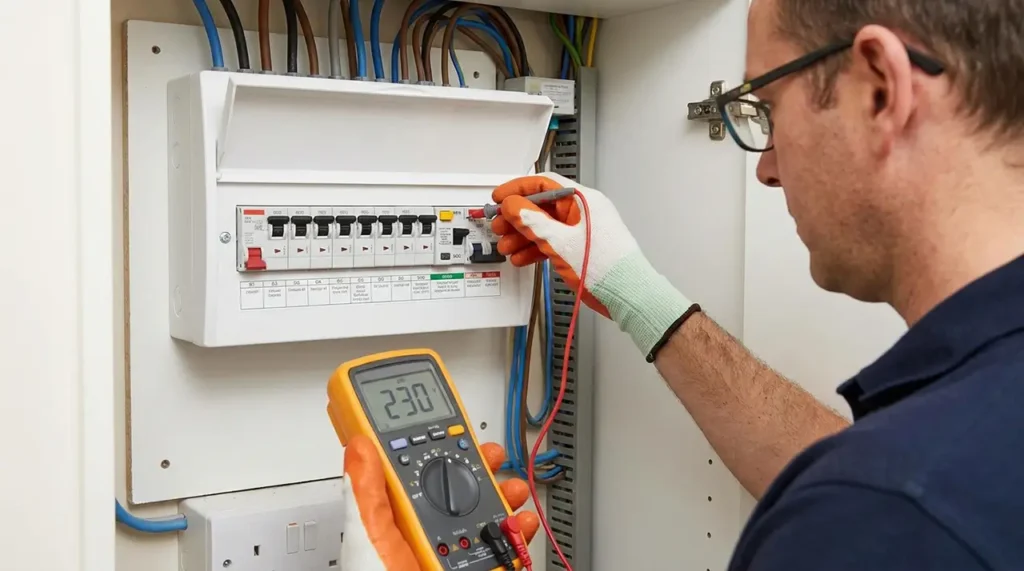
An Electrical Installation Condition Report (EICR), sometimes referred to by landlords as an electrical safety certificate, covers everything permanently wired into the property: the consumer unit (fuse box), the wiring behind the walls, socket outlets, light fittings, and anything hardwired in, like extractor fans or immersion heaters.
A qualified electrician tests each circuit against the UK wiring standard, BS 7671, and grades any issues found using a C1, C2, C3, or FI coding system, so you know exactly what needs fixing and how urgently.
How often: At least once every 5 years, or sooner if the report specifies.
Who can issue it: A qualified electrician, ideally NICEIC-approved.
Legal basis: The Electrical Safety Standards in the Private Rented Sector (England) Regulations 2020. Non-compliance can mean fines of up to £30,000.
Full details on our EICR Certificate page.
Gas Safety Certificate (CP12): Gas Appliances, Pipework, and Flues
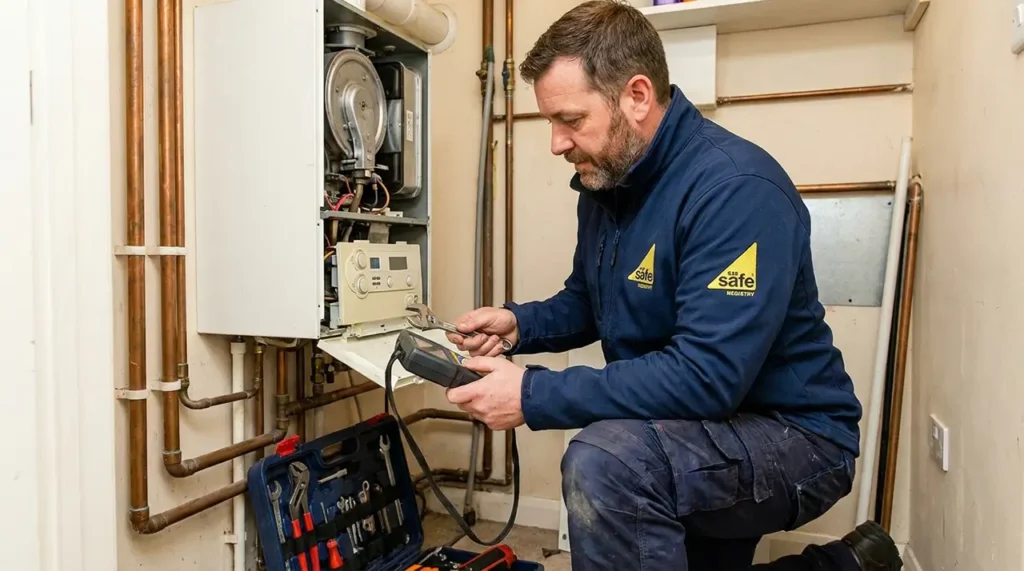
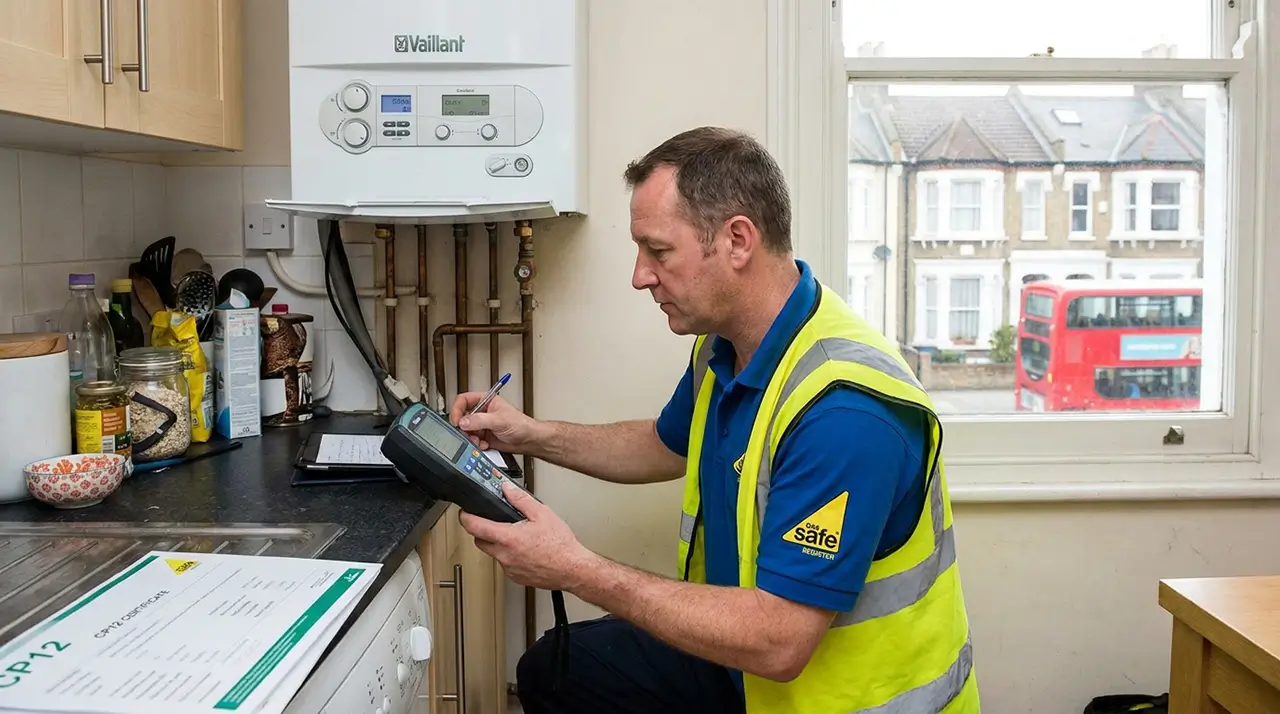
If your property has any gas appliances, whether that’s a boiler, a gas hob, or a gas fire, you need an annual Gas Safety Certificate, commonly still called a CP12. This is completely separate from the EICR and covers gas only, not electrics.
A Gas Safe registered engineer checks each appliance, the connecting pipework, and the flues for gas tightness, ventilation, and safe operation. If there’s no gas supply into the property at all, this certificate simply doesn’t apply.
How often: Every 12 months. You can renew up to 2 months before the anniversary date without losing your existing renewal cycle.
Who can issue it: Only a Gas Safe registered engineer.
Legal basis: The Gas Safety (Installation and Use) Regulations 1998, enforced by the HSE. Failure to obtain a valid Gas Safety Certificate is a criminal offence and can lead to prosecution.
Full details on our Gas Safety Certificate page.
PAT Testing: Appliances You Supply as Part of the Tenancy
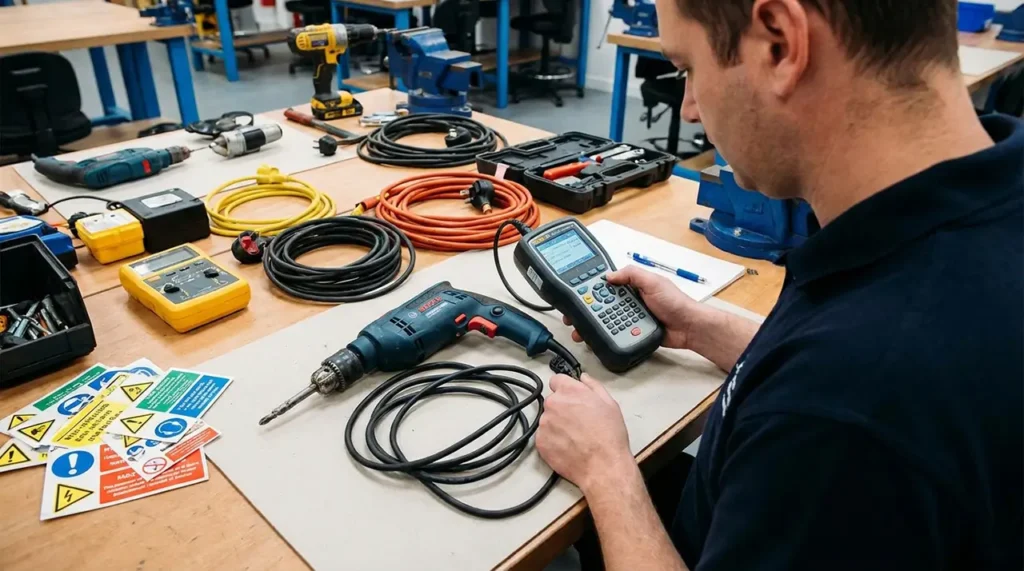
Portable Appliance Testing (PAT) covers anything plug-in that you, as the landlord, provide with the property, kettles, toasters, washing machines, microwaves, lamps, and similar. It doesn’t cover fixed wiring (that’s the EICR) and it doesn’t cover gas appliances (that’s the Gas Safety Certificate).
Unlike EICR and Gas Safety Certificates, PAT testing isn’t a strict blanket legal requirement for every rental in England the way the other two are. It’s strongly recommended as a way to demonstrate duty of care under the Electrical Equipment (Safety) Regulations, and it’s typically expected for HMOs and furnished lets where you’re supplying more appliances.
How often: No fixed legal interval, but annual testing is standard practice, more frequent for high-use HMO appliances.
Who can issue it: A competent person, often the same electrician handling your other certificates.
Full details on our PAT Certificate page.
Quick Comparison
| Certificate | What It Covers | How Often | Who Issues It |
|---|---|---|---|
| EICR | Fixed wiring, sockets, consumer unit | Every 5 years | Qualified electrician (NICEIC) |
| Gas Safety Certificate (CP12) | Gas appliances, pipework, flues | Every 12 months | Gas Safe registered engineer |
| PAT Testing | Plug-in appliances supplied by landlord | Typically annual (not a fixed legal cycle) | Competent person |
HMO Certificates: What’s Different
If you manage a House in Multiple Occupation (HMO), all three certificates still apply, but the requirements tend to be more involved. HMO electrical installations usually have more circuits, shared kitchens, and communal areas to test, which means EICR inspections take longer and often turn up more findings than a standard single-let.
For HMO PAT testing specifically, councils frequently expect evidence of testing on all landlord-supplied appliances as part of licensing, even though PAT isn’t a strict blanket legal requirement nationally. Many London boroughs ask for current EICR, Gas Safety, and PAT records as part of an HMO licence application or renewal, so it’s worth timing all three certificates to align with your licensing deadlines rather than treating them as separate, unrelated tasks.
If you’re unsure what your specific borough requires for HMO certification, it’s worth checking with your local council’s licensing team directly, requirements can vary by borough and by the size and layout of the property.
Which Certificates Does Your Property Actually Need?
It comes down to what’s in the property and how it’s let:
- Any rental property with mains electricity: needs an EICR. This applies to every rental in England, no exceptions.
- Any property with gas appliances: needs an annual Gas Safety Certificate on top of the EICR.
- Electric-only property with no gas supply: the Gas Safety Certificate doesn’t apply, you’ll just need the EICR.
- Furnished lets or HMOs where you supply appliances: PAT testing is strongly recommended, and often expected by councils as part of HMO licensing.
- Unfurnished lets with no landlord-supplied appliances: PAT testing generally isn’t relevant since there’s nothing for you to test.
Frequently Asked Questions
Not in the same strict sense as an EICR or Gas Safety Certificate. There’s no single law mandating PAT testing for every rental, but it’s expected as good practice under general electrical safety duties, and many councils require it as part of HMO licensing.
No. An EICR only covers fixed electrical wiring and installation. It has no bearing on gas appliances, pipework, or flues. If your property has gas, you need both certificates separately.
Often, yes, provided the company has both NICEIC-qualified electricians and Gas Safe registered engineers on staff. Booking all three through one provider in a single visit is usually more efficient than arranging separate call-outs.
Generally no. If you’re not supplying any plug-in appliances as part of the tenancy, there’s nothing for PAT testing to cover.
Cost varies by property size, number of circuits or appliances, and whether it’s a single let or an HMO. Get a tailored quote through our Landlord Safety Certificate Services page.
Booking Them Together
Since these three certificates are handled by different types of qualified engineer but often needed around the same time, particularly at the start of a new tenancy, it’s usually more efficient to book them as a single coordinated visit rather than three separate call-outs.
Need an EICR, Gas Safety Certificate, or PAT Testing? Our qualified engineers provide landlord safety certificates across London, with flexible appointments and combined bookings to save you time and repeated access arrangements with your tenant. See our Landlord Safety Certificate Services for full details.
The Bottom Line
Each certificate covers a different aspect of property safety, and none replaces another. Whether you manage a single buy-to-let or a portfolio of HMOs, keeping your EICR, Gas Safety Certificate, and PAT testing up to date helps protect your tenants and ensures you remain compliant with landlord safety regulations. If you’re unsure which certificates your property needs, our team can advise you and arrange all required inspections in one coordinated visit.