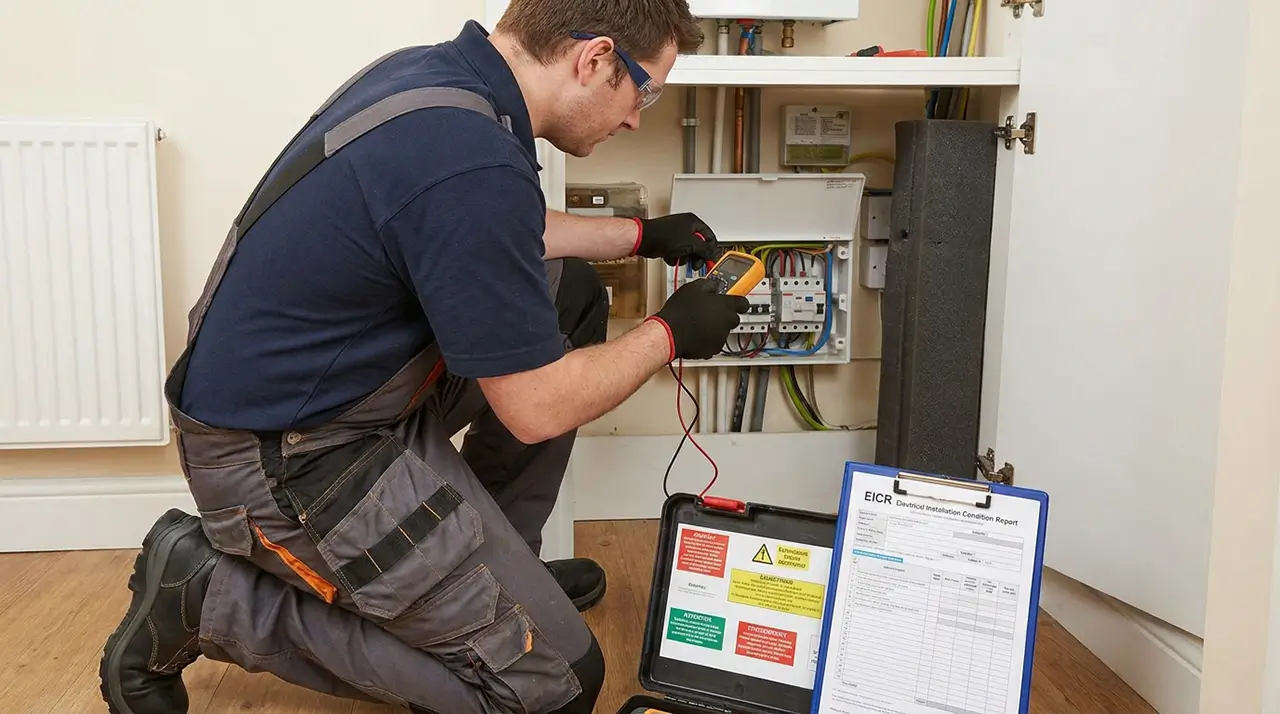
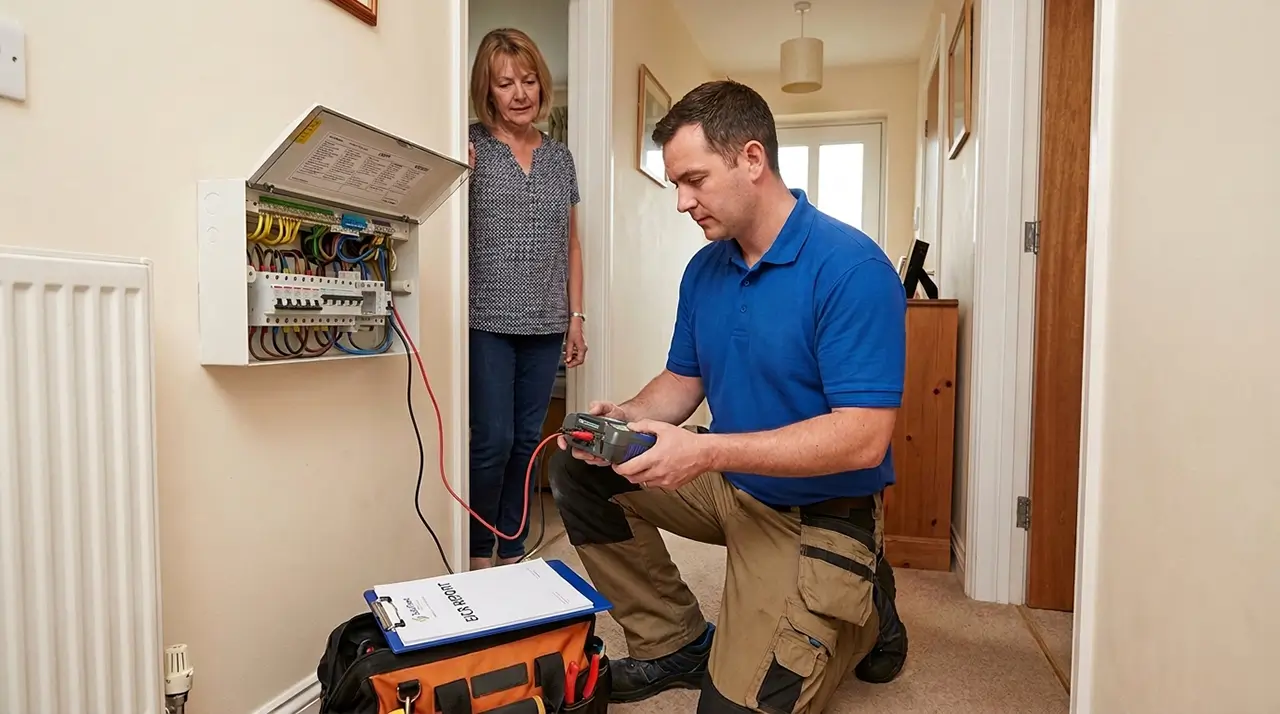
Not every electrician is qualified to issue a valid EICR, and getting this wrong is one of the easiest ways landlords end up with a certificate that doesn’t actually meet the legal standard. Here’s what “competent to carry out an EICR” actually means, and how to check before you book.
The Short Answer
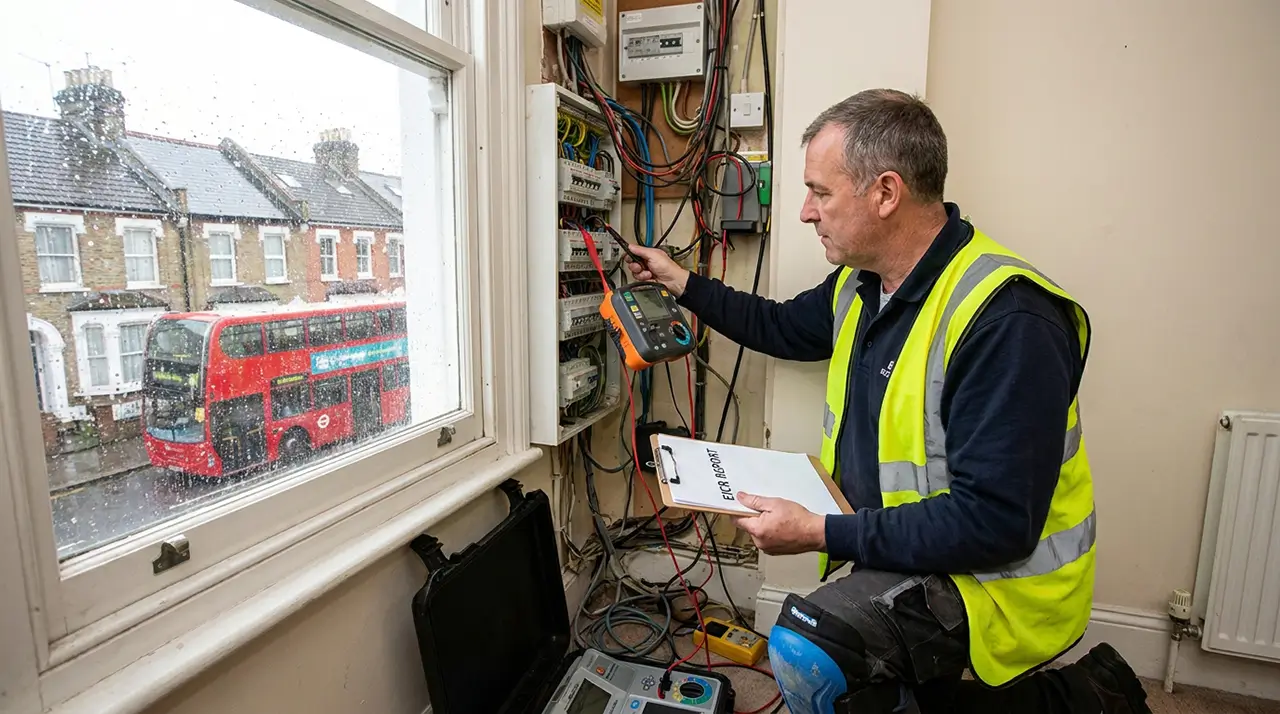
An EICR should be carried out by a competent person with the appropriate electrical qualifications, knowledge, experience, and test equipment to inspect and test the installation against BS 7671. For landlords in England, using an electrician or contractor registered with a recognised competent person scheme such as NICEIC or NAPIT provides an additional way to verify competence and credentials.
If you’re a landlord, you should not rely on yourself to inspect and certify your own rental property’s electrical installation, even if you’re confident in your own electrical knowledge. The inspection should be carried out by a suitably competent and qualified person who is independent of the landlord’s interests.
What Qualifications Should an EICR Electrician Have?
An electrician carrying out an EICR should have appropriate training and experience in inspection and testing, including knowledge of BS 7671 and the ability to correctly interpret test results and classify defects using the C1, C2, C3, and FI system.
For domestic EICRs specifically, it’s also worth asking whether the electrician has inspection and testing qualifications and experience with rental properties in particular, since domestic lets, HMOs, and commercial premises can throw up different issues.
What “NICEIC Registered” Actually Means
NICEIC is one of the UK’s leading certification bodies for electrical contractors. Registration isn’t automatic, contractors are assessed and regularly audited against technical competence, safety standards, and insurance requirements before being registered, and they’re subject to ongoing checks to stay on the register.

It’s worth being precise about the terminology here: NICEIC registers contractors, it doesn’t “approve” individual engineers in the sense of endorsing every person on staff. The person physically carrying out your inspection may work for a registered electrical contractor, so when checking credentials, it’s worth looking at both the contractor’s registration and the qualifications and experience of the person who will actually attend and perform the inspection.
Other recognised competent person schemes exist too, such as NAPIT, and any of these are generally accepted as equivalent for the purposes of carrying out a valid EICR.
How to Check an NICEIC Electrician
Before booking, it’s worth doing a few quick checks rather than taking a website claim at face value:
- Ask for the contractor’s NICEIC registration number
- Search that number on NICEIC’s official register to confirm it’s genuine and current
- Check that the contractor’s scope of registered work covers EICR inspections
- Confirm they specifically carry out domestic and rental property EICRs, not just general electrical installation work
- Ask who will actually attend the property to carry out the inspection
- Confirm what documentation you’ll receive after the inspection, and roughly when
Can a General Handyman or Unqualified Electrician Do It?
No. Even if someone is confident with basic electrical tasks, general handyman work and a legally valid EICR are entirely different things. An EICR requires specific test equipment, calibrated regularly, along with formal training in interpreting BS 7671 and correctly classifying any issues found. A report issued by someone who isn’t suitably competent may not satisfy your obligations as a landlord, even if it looks like a proper certificate on paper.
What About Apprentices or Trainee Electricians?
An apprentice can be involved in the inspection process under supervision, but the final inspection and report should be completed and signed off by a suitably qualified and competent person working under the appropriate contractor arrangements. If a trainee is involved, it’s reasonable to ask who is supervising the work and who is responsible for the final report.
What Should You Receive After an EICR?
After the inspection, you should receive a completed Electrical Installation Condition Report showing:
- Property details
- Installation details
- The extent and limitations of the inspection
- Test results for each circuit
- Any observations recorded during testing
- C1, C2, C3, or FI classifications where applicable
- An overall assessment of the installation (satisfactory or unsatisfactory)
If your report is missing any of these, or feels vague on the detail, it’s a reasonable prompt to ask the electrician for clarification before you rely on it.
Being Cautious of Very Cheap Quotes
A low price isn’t automatically a sign of poor workmanship, but a quote substantially below the normal London range should prompt you to check exactly what’s included and who will carry out the inspection. See our EICR cost guide for typical current pricing. A properly thorough EICR takes real time on-site, testing every circuit individually, so if a quote seems too good to be true relative to that, it’s worth asking a few more questions before booking rather than after.
Who Should You Book For an EICR?
At a minimum, look for:
- Registration with NICEIC or an equivalent competent person scheme
- Experience specifically with domestic and rental property EICRs
- A clear explanation of what the inspection covers and how findings are classified
- A fixed-price quote based on your actual property, not a vague estimate
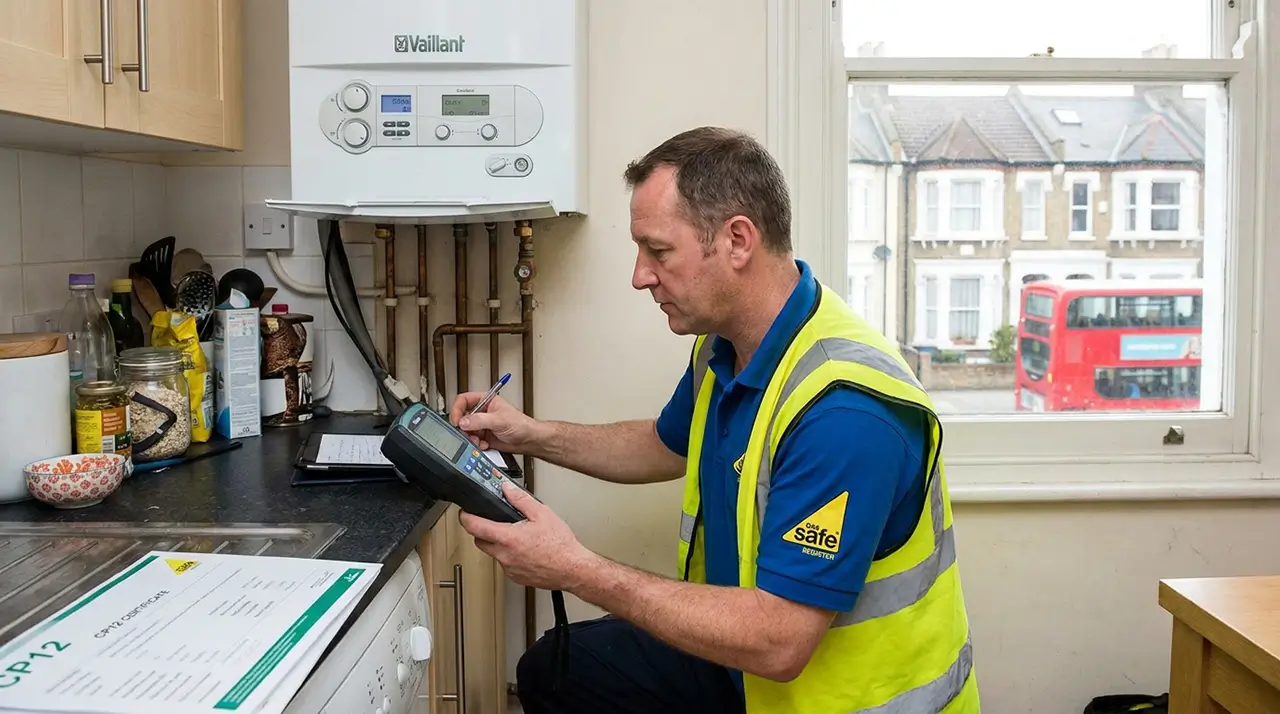
If your property also needs a Gas Safety Certificate or PAT testing, it’s worth checking whether the same provider can carry out all three, since a firm that’s both NICEIC-registered and Gas Safe registered can coordinate your full landlord certificate requirements in a single visit rather than you having to vet separate contractors for each one.
Frequently Asked Questions
As a landlord, you shouldn’t rely on yourself to inspect and certify your own rental property. The inspection should be carried out by someone suitably competent and independent of your interests as the property owner.
No. NAPIT and several other competent person schemes are also recognised. What matters is that the electrician is registered with a legitimate, auditable scheme, not which specific one.
Search their registration number directly on the scheme’s own official register (for example, NICEIC’s public register) rather than relying on a badge or logo displayed on the electrician’s own website, which can’t be independently verified that way.
Not necessarily, but a price well below the typical market range is a reasonable prompt to check credentials and scope more carefully before booking, as covered in our EICR pricing guide.
If you have concerns about whether the person who carried out the inspection was suitably competent, don’t assume the report satisfies your obligations. Ask a suitably qualified electrician to review the circumstances and, where appropriate, arrange a new inspection.
The Bottom Line
The value of an EICR depends entirely on the competence of the person carrying it out. Checking registration, asking direct questions about qualifications, and being cautious of quotes that seem too good to be true relative to the scope of work are the simplest ways to make sure the certificate you end up with genuinely reflects your property’s electrical safety.
Need an EICR in London? KCS Electrics provides EICR inspections for landlords, homeowners, and businesses, with clear pricing, transparent credentials, and straightforward reporting. Get your tailored quote today.