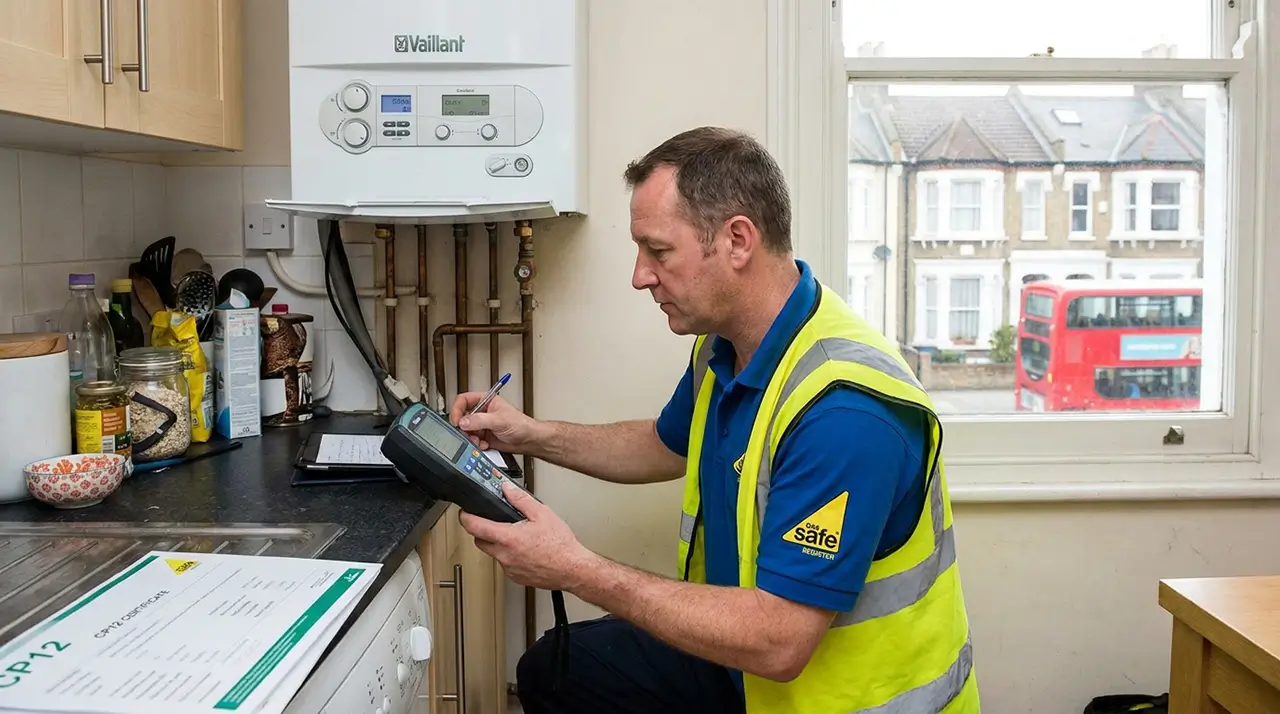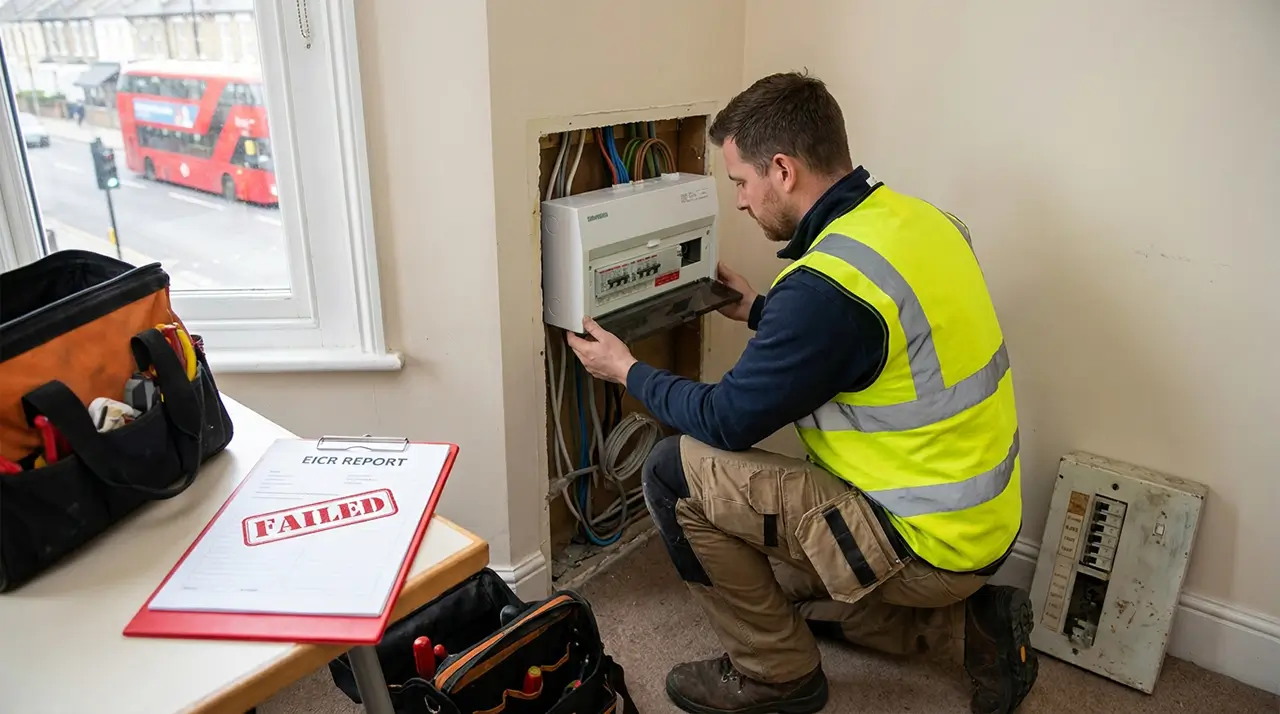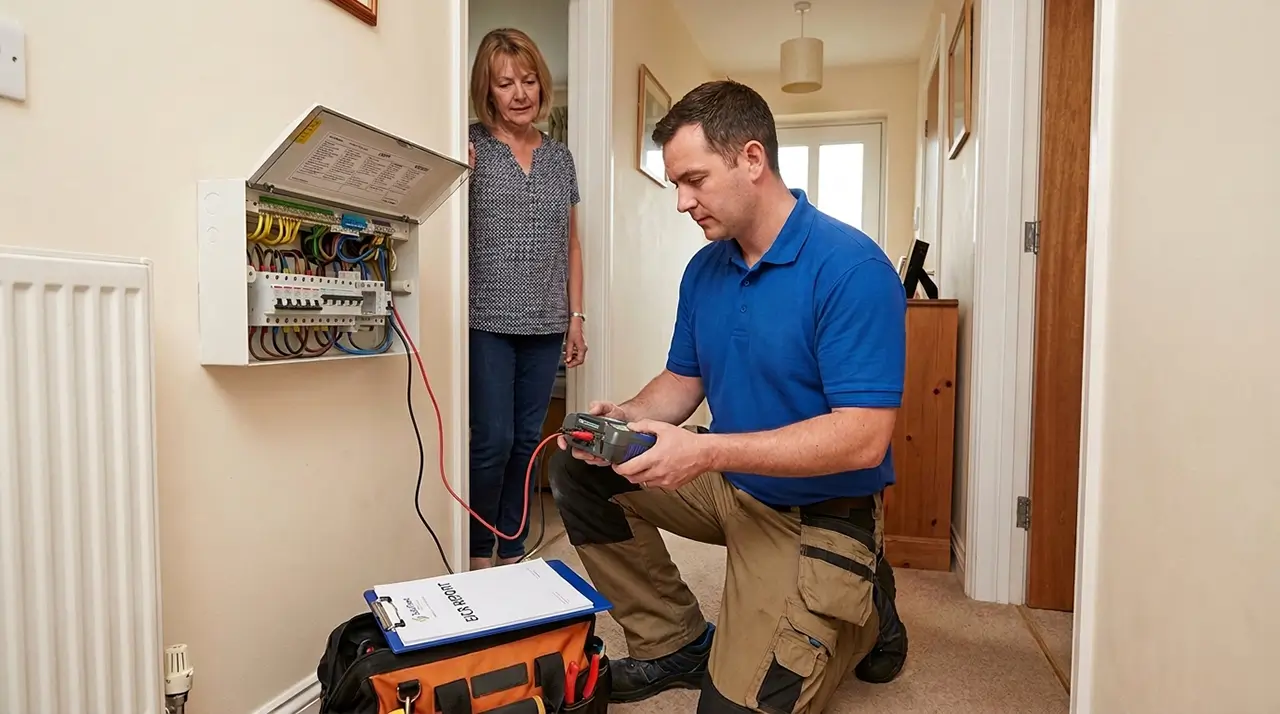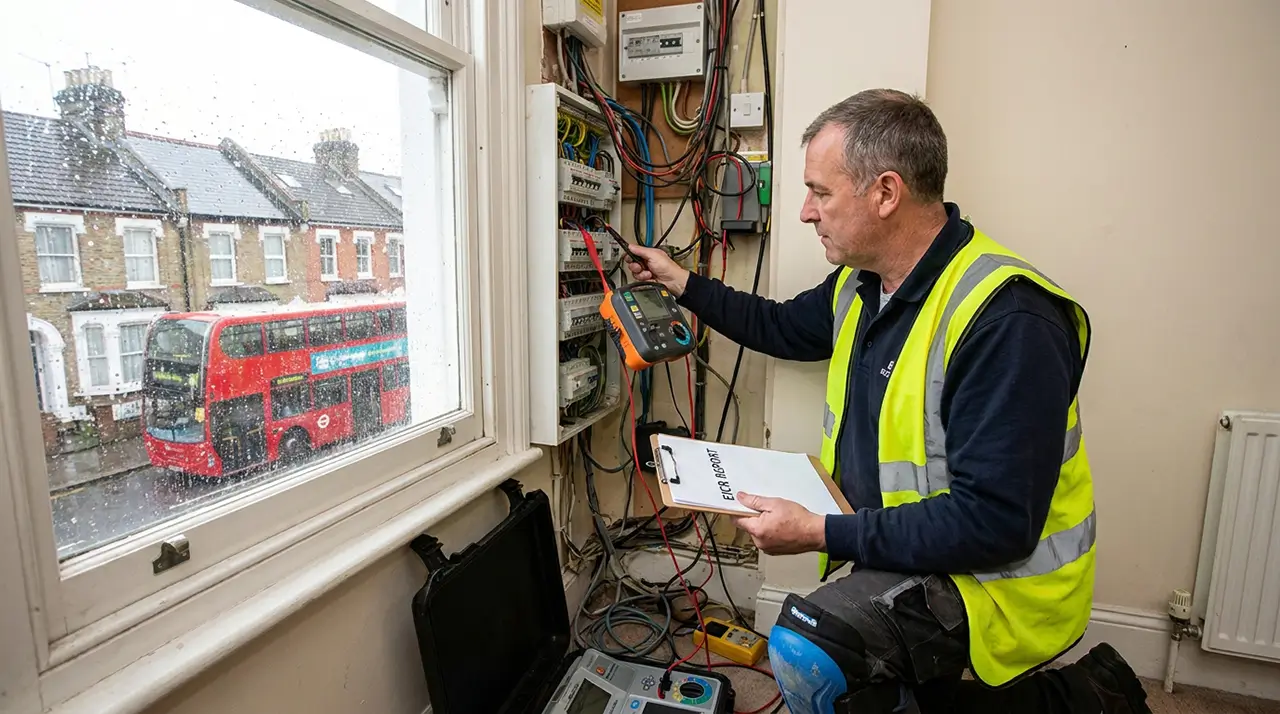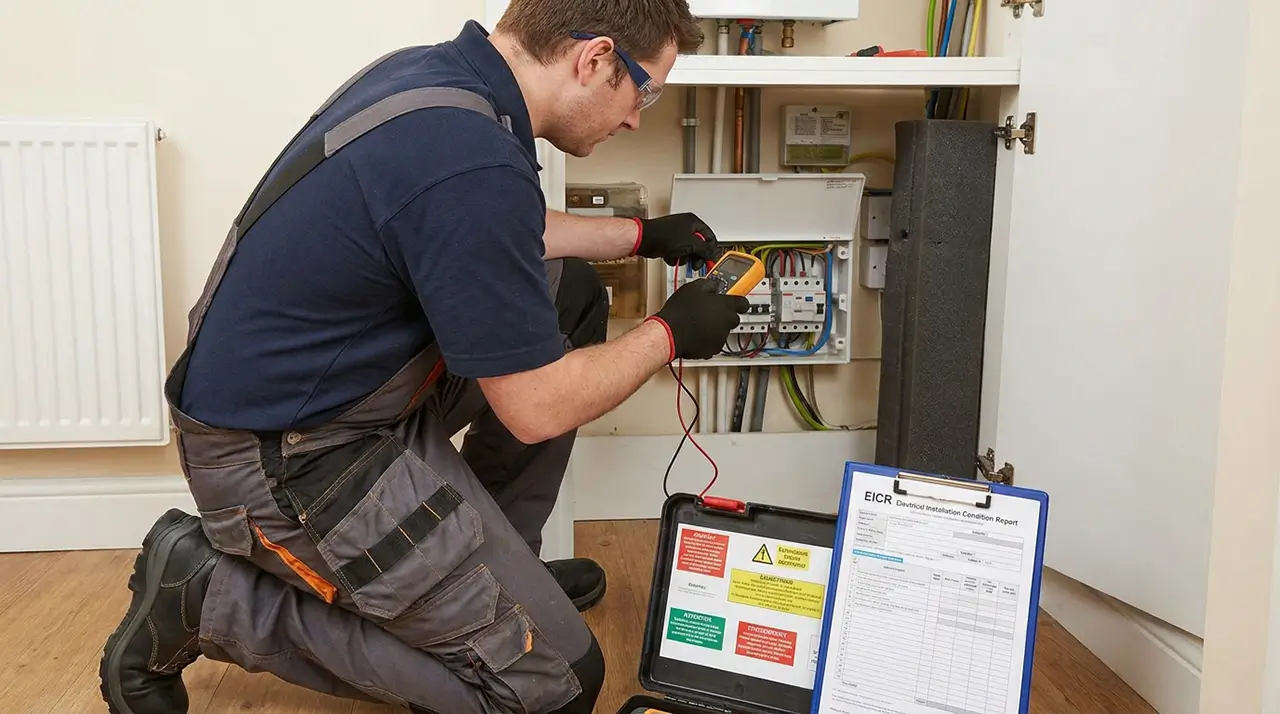

Whether you’re a landlord preparing for a routine electrical safety inspection or arranging your first EICR, a little preparation helps the inspection run more smoothly and avoids unnecessary delays. Preparing your property beforehand gives the electrician uninterrupted access for testing, reducing delays and helping the inspection run more efficiently, rather than working around locked doors, blocked sockets, or missing access.
Quick EICR Preparation Checklist
- Clear access to the consumer unit
- Unlock every room
- Move furniture away from sockets
- Gather previous EICRs, if you have one
- Tell the electrician about any known faults
- Arrange access with tenants in advance
- Keep pets secure during the visit
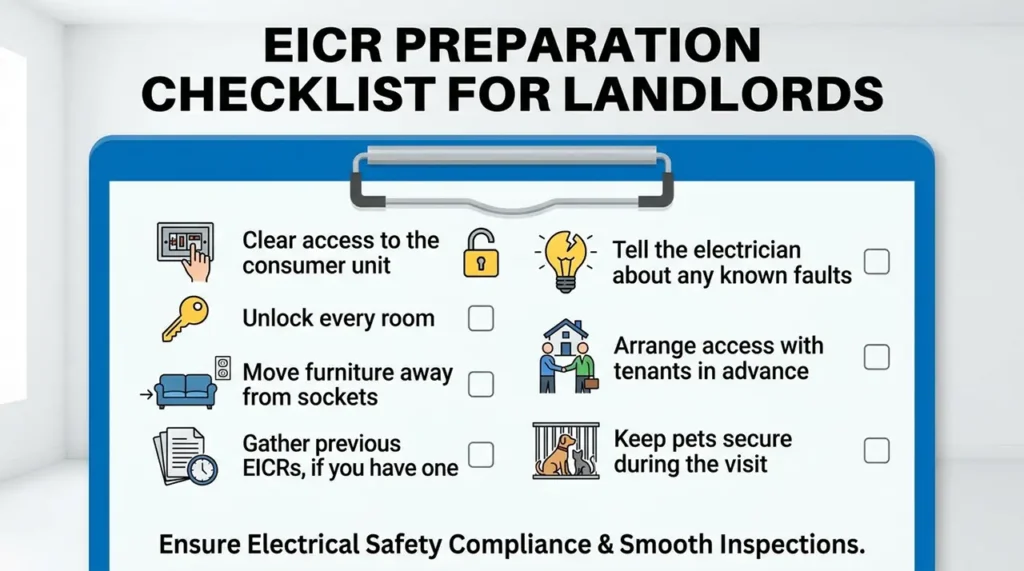
Here’s the detail behind each of these, plus what to expect once testing is done.
1. Clear Access to the Consumer Unit and Key Circuits
The consumer unit (often called the fuse box) is the starting point for almost every EICR inspection. If it’s boxed in behind furniture, stored items, or a locked cupboard, that’s the first thing slowing the inspection down.
Before the appointment:
- Make sure the consumer unit is fully accessible, nothing stacked in front of it, no furniture blocking the cupboard door
- Check any outbuildings, garages, or lofts with electrical circuits are unlocked and reachable
- Clear space around sockets and switches the electrician is likely to test, particularly in kitchens and bathrooms where appliances often block access
2. Make Sure Every Room Is Accessible
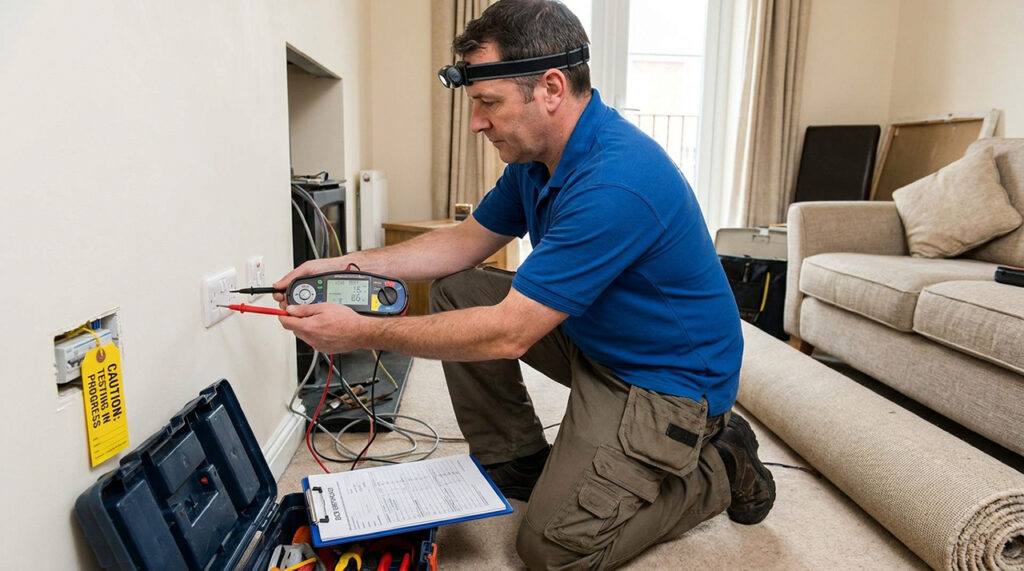
An EICR covers the whole property, not just the areas you think of as “electrical.” If a tenant, family member, or lodger has a room locked, or a spare room is being used for storage with boxes piled against the walls, the electrician either can’t test it properly or has to come back another day.
If the property is tenanted, give your tenant proper notice of the appointment (usually at least 24 hours under most tenancy agreements) and confirm they’ll either be present or leave access arranged, with all rooms unlocked for the visit.
3. List Any Known Issues Beforehand
Don’t worry about mentioning known faults. Telling the electrician beforehand allows them to assess the issue more efficiently and often speeds up the inspection, rather than having them find it independently partway through testing. If you’re aware of a flickering light, a socket that trips the circuit, an extension lead that’s been a permanent fixture for two years, or any electrical work done since the last inspection, mention it when you book and again on the day.
It’s also worth having a rough idea of any electrical work carried out on the property since the last EICR, extensions, rewiring, new circuits added for a kitchen refit, and so on. If you have the paperwork (an EIC or Minor Works Certificate) for any of that work, have it ready. It helps the electrician cross-reference what they’re testing against what should already be compliant.
4. Think About Pets and Access Times
If you have pets that might make testing difficult, particularly dogs that react to strangers in the house or animals that need to be kept away from a specific room, plan for that in advance. Similarly, if the property has restricted access times (a business with fixed opening hours, a tenant who works shifts), confirm the appointment window works for everyone involved before the day arrives.
5. Don’t Try to Fix Anything Yourself First
It might feel like a good idea to sort out a loose socket or a dodgy switch before the inspection, but unless you’re a qualified electrician, DIY fixes right before an EICR can cause more problems than they solve. Non-compliant repairs, even minor ones, tend to get picked up during testing and can add findings to the report rather than remove them. If something’s clearly not working, leave it for the electrician to assess properly rather than attempting a quick fix beforehand.
Typical Inspection Times
How long an EICR takes depends on the size of the property and the number of circuits, but as a rough guide:
- 1-bedroom flat: 1 to 2 hours
- 2 to 3 bedroom house: 2 to 4 hours
- Larger HMO: 4+ hours
Actual times vary depending on the condition of the installation and how many circuits need testing, so treat these as a starting point rather than a fixed quote.
Avoid These Common Mistakes
Blocking the consumer unit with furniture or storage Forgetting to unlock garages or lofts with electrical circuits Not informing tenants of the appointment in advance Booking a time when nobody can provide access Attempting DIY electrical repairs right before the inspection
6. Know What to Expect on the Day
A typical EICR involves a visual inspection followed by a series of dead and live tests on the circuits, checked against the requirements of BS 7671 (the UK Wiring Regulations). Power may need to be switched off at points during testing. This allows the electrician to safely carry out both dead tests and live tests required under BS 7671, so it’s worth planning around this if anyone in the property relies on continuous power for medical equipment, home working, or similar. The electrician will usually let you know roughly how long the appointment will take once they’ve seen the property size and number of circuits.
7. Have Your Previous EICR Ready, If You Have One
If this isn’t the first inspection for the property, having the previous report to hand gives the electrician useful context, particularly if it noted any recommendations for improvement (C3 findings) that weren’t classed as urgent at the time but are worth checking again.
What Happens After the Inspection
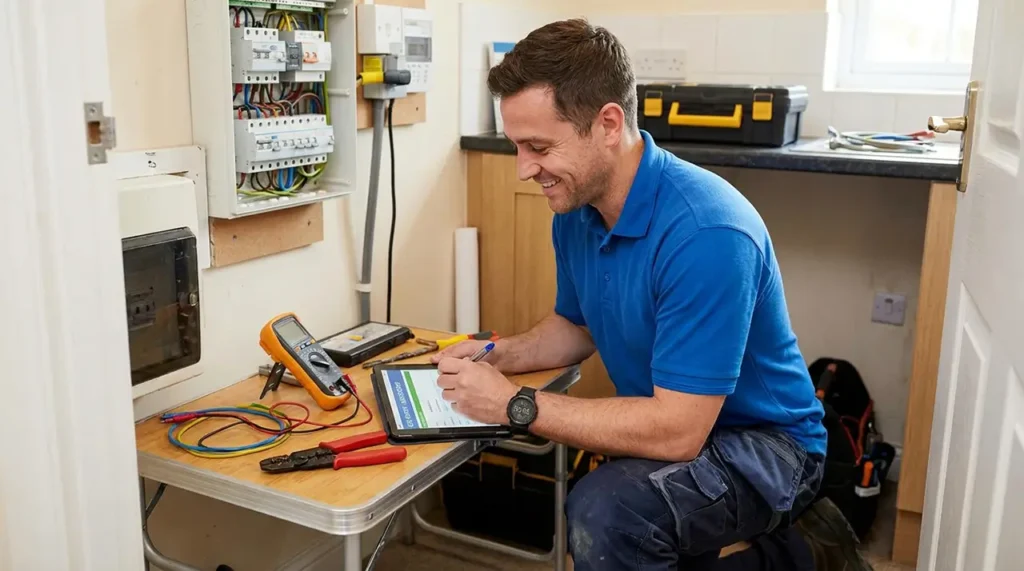
Once testing is complete, you’ll receive a report classifying any issues found using the C1, C2, C3, or FI coding system.
A “Satisfactory” result means no dangerous or potentially dangerous issues were found, so the installation meets the required standard and the certificate is valid for its full term.
An “Unsatisfactory” result means at least one C1 or C2 issue was identified. C1 findings present an immediate danger and typically need addressing straight away. C2 findings are potentially dangerous and require remedial work as a matter of urgency, generally within 28 days, or sooner if the report specifies.
How long is the report valid? Usually 5 years for a rented property, though the report may recommend a shorter interval if the installation is older or heavily used.
When must remedial work be completed? Within 28 days of the report for C1 and C2 findings, unless the electrician specifies an earlier deadline based on the severity of the issue. Once the work is done, you’ll need written confirmation from the electrician, which goes to your tenant and, if requested, your local council.
For a full breakdown of your legal obligations once you have the report, see our guide to EICR certificates in London, including current EICR pricing and turnaround times.
If any remedial work is needed, our consumer unit replacement service covers one of the most common fixes flagged during an EICR.
If you’re also due a Gas Safety Certificate or PAT testing around the same time, it’s worth checking our comparison of EICR, Gas Safety, and PAT testing to see whether it makes sense to book them together in one visit, or explore our full Landlord Safety Certificate Services for a coordinated appointment covering all your certificates at once.
What Your Electrician Will Need
Before the inspection, make sure you have:
- Previous EICR, if available
- Certificates for any recent electrical work
- Access to all rooms
- Access to the consumer unit
- Tenant contact details, if applicable
Frequently Asked Questions
Yes. There’s no requirement to leave, though the electrician will need clear access to move between rooms and circuits throughout the visit.
Only cupboards housing the consumer unit or electrical circuits need to be cleared. General storage cupboards without electrics don’t need to be emptied.
Power is switched off briefly at points during testing, particularly for dead testing on circuits. This is normal and usually only affects short periods during the visit.
No. The inspection tests the fixed wiring and installation, not your appliances. Appliances themselves aren’t part of an EICR (that falls under PAT testing).
Tenants are generally expected to provide reasonable access for safety inspections where proper notice has been given and the tenancy agreement allows for this. If access is refused, it’s worth keeping a written record of your attempts to arrange the visit.
Although many EICRs are carried out for landlords, homeowners often arrange inspections before buying, selling, or renovating a property, so the same preparation steps apply regardless of who’s booking.
The Bottom Line
Most delays and avoidable findings during an EICR come down to access, not the condition of the wiring itself. Clearing the consumer unit, unlocking every room, flagging known issues in advance, and having a previous report on hand if you have one will get you through the inspection faster and with a clearer understanding of your property’s electrical safety.
Need an EICR in London? Our qualified electricians carry out inspections for landlords, homeowners, and businesses across London. We provide clear reports, explain any findings in plain English, and can complete remedial work where required. Contact us today to arrange your inspection.